
Brand Hub
Reebok Exercise Bikes: The Connected Cycles Compared
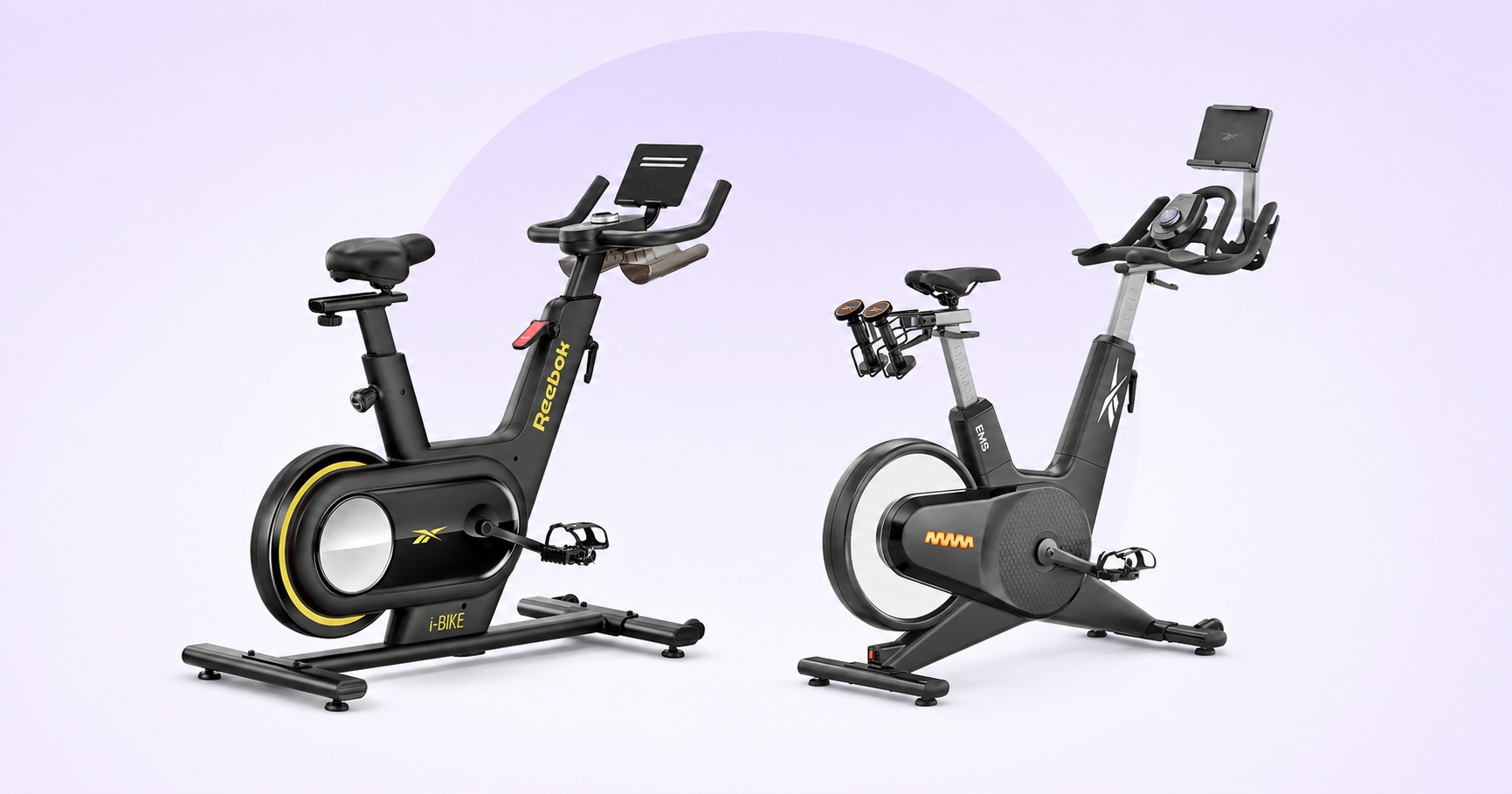
Reebok’s two connected indoor cycles, the Z-Tech Sprint and the i-Bike, take a refreshingly open approach: no compulsory subscription, and they connect to the apps you already use, including Zwift, Kinomap and even Peloton. These are the more capable bikes in Reebok’s line-up, and here is how they compare, scored with FitRank.
Both bikes are sold through Sweatband in the UK, and both come with a 60-day free Kinomap trial and a 2-year warranty. What sets them apart from a brand like Echelon is openness. Where an Echelon bike ties you to its own paid app, Reebok’s bikes are app-agnostic: they pair over Bluetooth with whichever training app you prefer, or none at all, with no monthly fee of Reebok’s own. Reebok does make simpler indoor bikes as well, including the FR30 and FR30 Sprint sold through Argos, but this guide focuses on its two more capable connected cycles. The Z-Tech Sprint is the premium bike, with electromagnetic resistance and a performance focus, while the i-Bike is the compact, more affordable connected option. We have scored both with FitRank below.
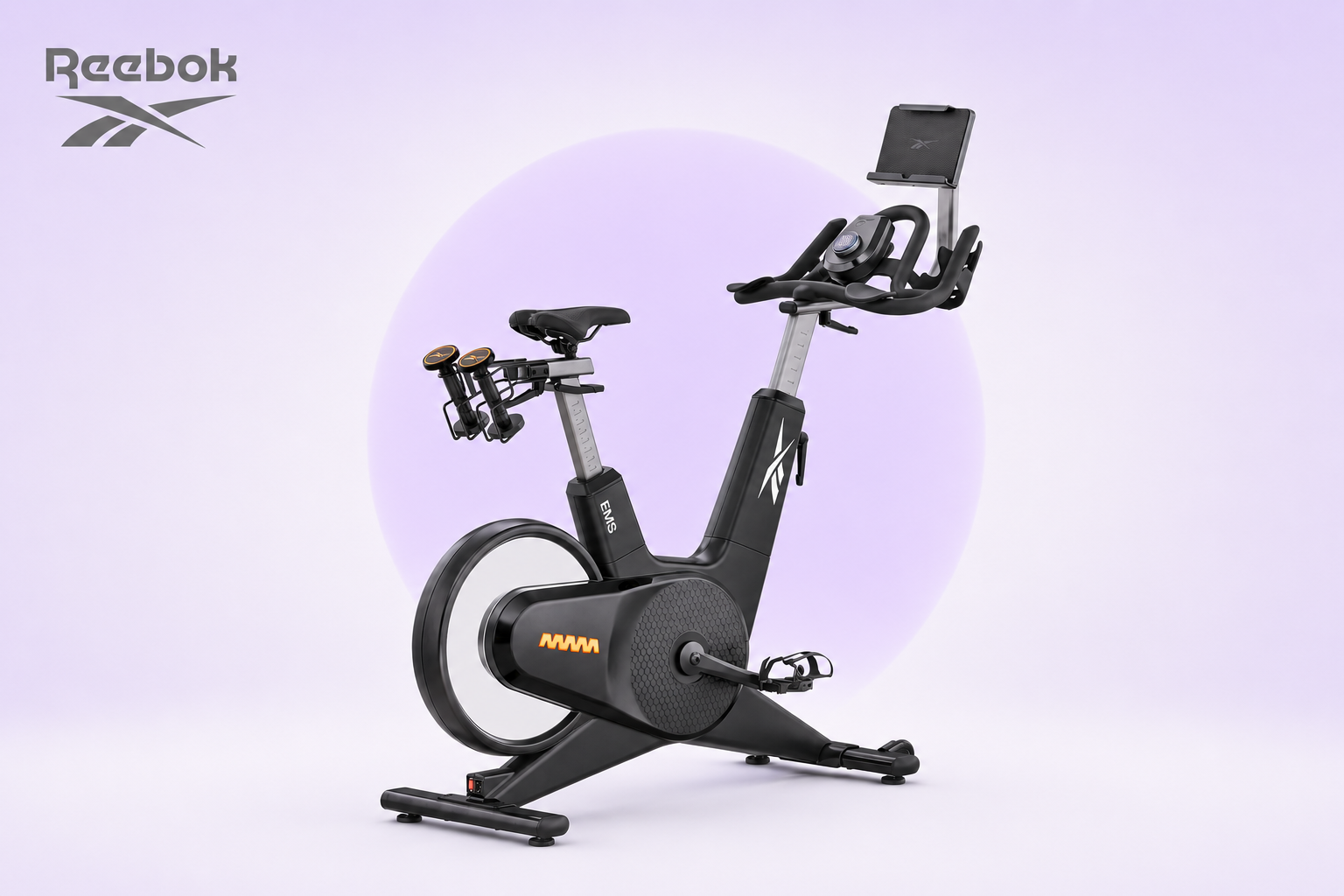
Reebok Z-Tech Sprint
The premium Reebok: a 13kg flywheel, 50 levels of app-controllable electromagnetic resistance, forearm rests and the widest app support here, Zwift, Kinomap, Peloton and Rouvy. A lot of bike for the sale price.
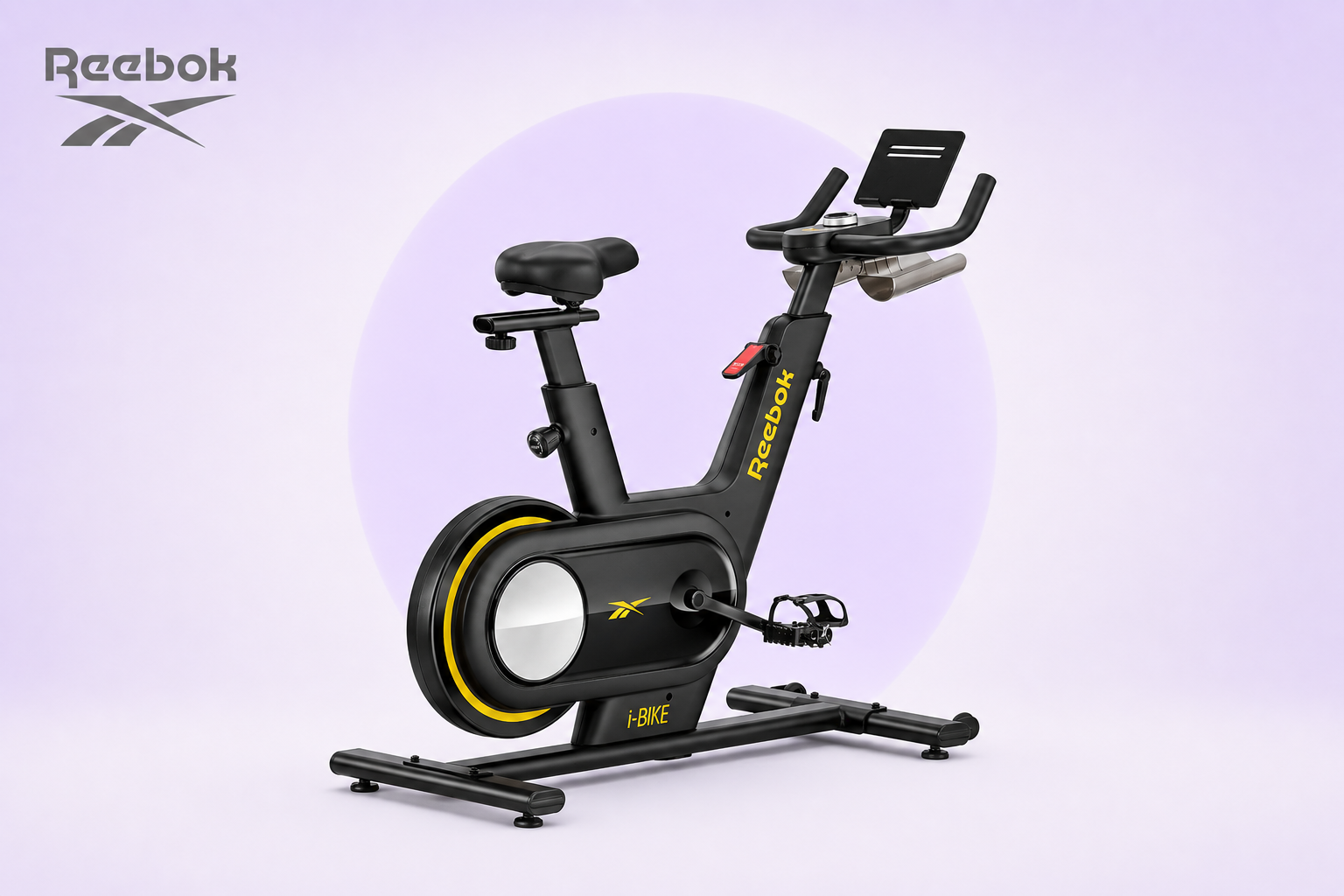
Reebok i-Bike
The compact, affordable entry: an 8kg flywheel, 32 levels of computer-controlled magnetic resistance, self-levelling pedals and Zwift and Kinomap support. A tidy bike for smaller homes and tighter budgets.
Reebok exercise bikes compared
| Model | Flywheel | Resistance | Apps | Max user | Price | FitRank |
|---|---|---|---|---|---|---|
| Z-Tech Sprint | 13kg | Electromagnetic, 50 levels | Zwift, Kinomap, Peloton, Rouvy, Reebok | 150kg | £699 (£629.10 with GOAL10) | 4.5 |
| i-Bike | 8kg fixed | Magnetic, 32 levels | Zwift, Kinomap, Reebok | 110kg | £349 (£314.10 with GOAL10) | 4.1 |
Both share Bluetooth, a rotating dial or LED console, 17 workout programmes, a tablet holder, a 60-day Kinomap trial and a 2-year warranty. The Z-Tech adds USB-C tablet charging and a pair of 1.5kg dumbbells.
Open platform: no subscription, your choice of app
This is the best reason to look at Reebok. Both bikes connect over Bluetooth to the training apps you choose, rather than locking you into one ecosystem. The i-Bike works with Zwift, Kinomap and the Reebok Console app, while the Z-Tech adds Peloton and Rouvy on top, so you can follow Peloton’s coaches, race virtual routes in Zwift, ride real-world roads in Kinomap or Rouvy, or simply use the bike’s own console. Crucially, there is no compulsory Reebok subscription: you pay for whichever app you want, on a free tier or a paid plan, or nothing at all. Both bikes include a 60-day free Kinomap trial to get you started. For anyone who wants the flexibility to switch apps, or to avoid a forced monthly fee, that openness is a real advantage over a closed system like Echelon or Peloton’s own hardware.
Electromagnetic or magnetic resistance?
The two bikes use different resistance systems, and it is the main thing separating them. The Z-Tech Sprint uses 50 levels of electromagnetic resistance, which is finer and, importantly, app-controllable: in a Zwift workout or a Kinomap route the app can adjust your resistance for you as the gradient changes, giving a more immersive, automatic ride. The i-Bike uses 32 levels of computer-controlled magnetic resistance, adjusted on its rotating dial. Both are quiet and smooth, but the Z-Tech’s electromagnetic system gives more precise control and the auto-resistance feature that performance-minded riders and structured-workout fans will appreciate.
Reebok discount codes and sales
Both Reebok bikes are already discounted from their RRP at Sweatband, and the code GOAL10 takes a further 10% off at checkout. At the time of writing that brings the Z-Tech Sprint down to £629.10 from a £900 RRP, and the i-Bike to £314.10 from £399. Sale prices and codes change, so it is worth checking the current offer before you buy, and we flag the live discount on each bike in the cards above.
What about the Reebok FR30, FR30 Sprint and other bikes?
Reebok’s range is wider than the two bikes here. The FR30 and FR30 Sprint are simpler indoor cycles sold through Argos, sitting below the Z-Tech and i-Bike on features and connectivity, and if you have been searching for a while you may also have come across older models like the ZR8, ZR9 and ZR10. We focus on the Z-Tech Sprint and the i-Bike because they are the more capable, app-connected machines and the ones we would steer most buyers towards. If you are weighing up an FR30 or an older Reebok bike, the i-Bike is the natural connected choice at the affordable end, and the Z-Tech Sprint at the performance end.
How to choose a Reebok bike
Compact and affordable, or premium and performance?
The decision is fairly clear-cut. The i-Bike is the one for smaller homes and tighter budgets: it is compact at 131 by 51cm, lighter to move, and connects to the core apps for a fraction of the Z-Tech’s price. The Z-Tech Sprint is the one for performance and immersion: a heavier 13kg flywheel for a more road-like ride, electromagnetic auto-resistance, forearm rests for an aero position, a 150kg user limit and the broadest app support, including Peloton.
Check the user weight limit
One practical point worth flagging: the i-Bike is rated to 110kg, while the Z-Tech supports up to 150kg. If you are near the i-Bike’s limit, the Z-Tech is the sturdier, more comfortable long-term choice.
Is Reebok a good brand for exercise bikes?
Reebok is a long-established name, and its two indoor cycles punch above their price, particularly on the sale prices they tend to sell at. The open, app-agnostic approach is the highlight: broad compatibility with Zwift, Kinomap, Peloton and Rouvy, no forced subscription, and a 2-year warranty on both bikes. The Z-Tech in particular offers a specification, electromagnetic resistance, a 13kg flywheel, a 150kg limit and five compatible apps, that usually costs more elsewhere. If you want a connected bike without being tied to one company’s monthly fee, Reebok makes a strong case.
Reebok versus Echelon and Peloton
The contrast comes down to open versus closed. An Echelon or a Peloton bike is built around that brand’s own app and paid membership, which buys you a polished class experience but locks you in and keeps charging. Reebok takes the opposite approach: the hardware is yours, and you bring whichever app you like, including the Peloton app itself on the Z-Tech. You give up the seamless all-in-one feel of a built-in touchscreen, since you supply your own tablet, but you gain flexibility and avoid a compulsory fee. For riders who already use Zwift or Peloton Digital, or who simply do not want another subscription, Reebok is the more sensible buy. For those who want the slickest out-of-the-box class experience, Echelon or Peloton still lead.
Frequently asked questions
Do Reebok bikes need a subscription?
Which apps work with Reebok bikes?
What is the difference between the Z-Tech and the i-Bike?
Is there a Reebok discount code?
Can I use a Reebok bike with Peloton?
What warranty do Reebok bikes come with?
For exercise bikes beyond Reebok, see our main best exercise bikes guide, and read how we score every product on the FitRank page.

Chris writes the home fitness reviews across our sites, including our sister site HomeTreadmill.co.uk. He compares every machine against its rivals on UK pricing and specs, and scores each one with FitRank.