
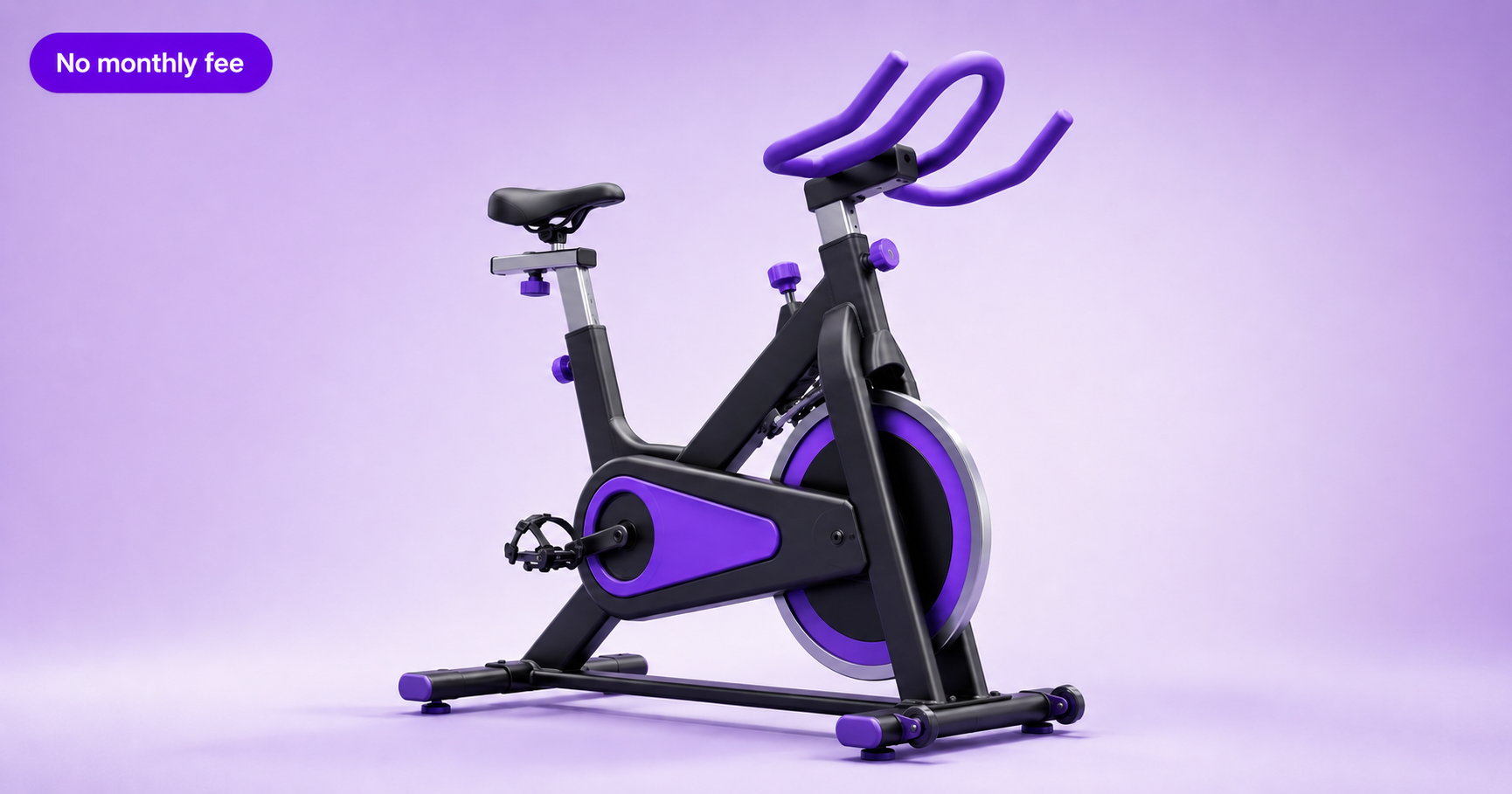
Exercise Bikes · Buying Guide
Best Exercise Bikes Without a Subscription
Plenty of the best-known indoor bikes tie you to a monthly membership before they are much use. These do not. Every bike below rides fully on its own, connects to the apps you already have if you want, and charges no compulsory fee, ranked on FitRank, with current UK prices.
The big connected brands, Peloton, Echelon and the iFIT bikes from NordicTrack and ProForm, build their appeal around a paid platform. The classes, the automatic resistance and the scenic routes all sit behind a membership, and over a few years that fee can add up to more than the bike itself. The bikes on this list take the opposite approach. Some connect over Bluetooth to apps like Zwift, Kinomap and even Peloton using your own account, others have no apps at all, but none of them charges you a membership of its own. You buy the bike once and it is yours.
We have scored every bike on the site with FitRank, our editorial rating out of 5, and this list is ordered strictly by that score, so the ranking matches the numbers you see on each bike. Here are the seven best subscription-free exercise bikes in the UK right now.
The quick list
- Best overall · JTX Studio Pro · FitRank 4.6 · £799
- Best for HIIT and intervals · JTX Ignite AirX Rider · FitRank 4.6 · £799
- Best connected value · Reebok Z-Tech Sprint · FitRank 4.5 · £699
- Best compact · Reebok i-Bike · FitRank 4.1 · £349
- Best heavy flywheel · adidas C-21x · FitRank 4.0 · £699
- Best budget · JTX Cyclo-3M · FitRank 3.9 · £299
- Best ultra-budget connected · Viavito Satori · FitRank 3.8 · £229
JTX Studio Pro
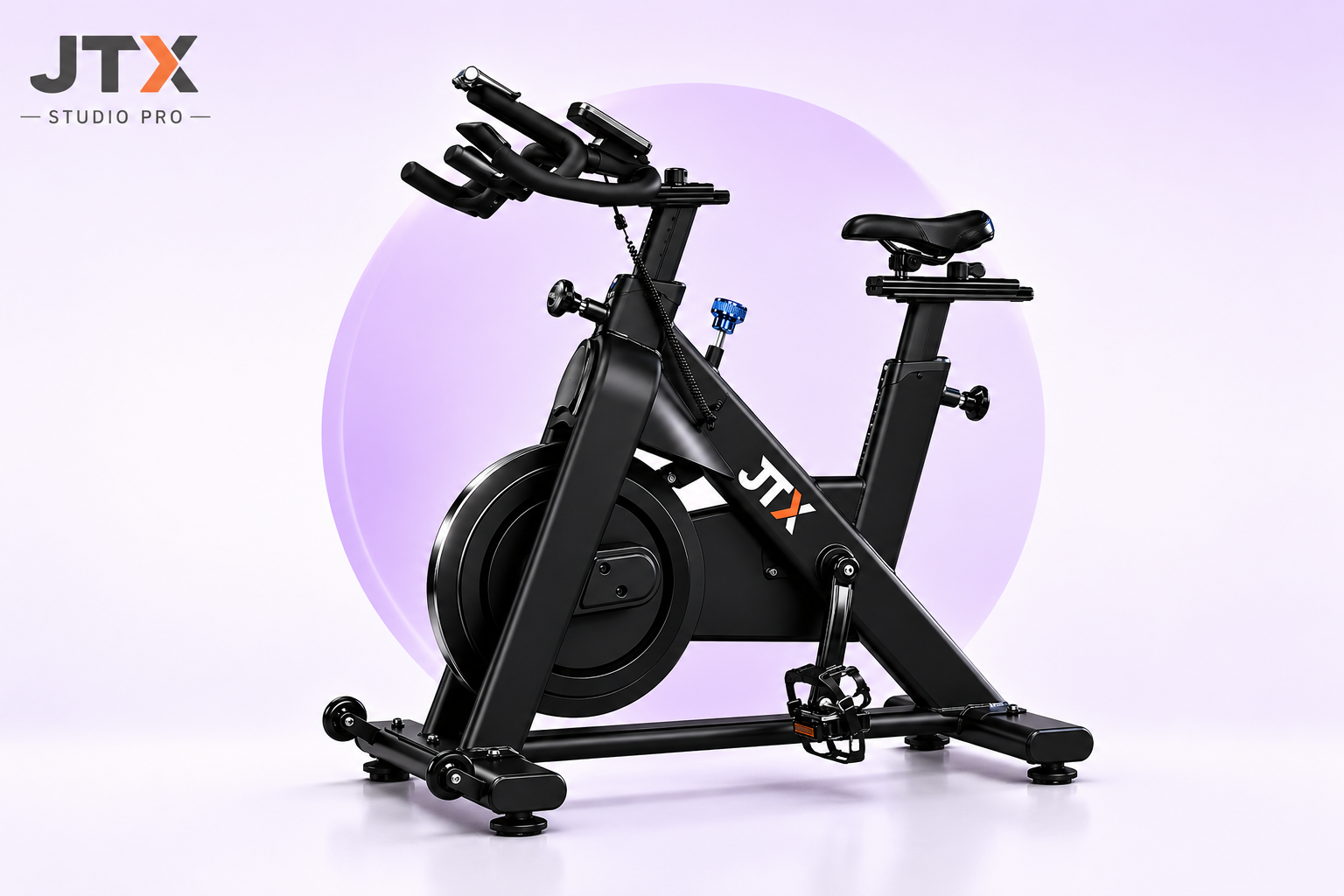
The JTX Studio Pro is the best subscription-free bike we have compared, and it earns it on ride quality. A commercial-grade frame, a heavy 16kg flywheel and 32 magnetic levels give it a smooth, road-like feel, and it connects to Zwift and Kinomap through your own tablet using your own account. JTX is a British brand that sells direct and handles its own servicing, so it comes with a 3-year in-home warranty and no middleman.
There is no compulsory JTX fee at any point. You ride whatever app you like, free or paid, or none at all, and the bike is fully yours from day one.
Best for Serious, structured riders who want a proper studio ride and are happy to bring their own screen.
Watch-out A committed buy at £799, and you supply the tablet rather than getting a built-in display.
JTX Ignite AirX Rider
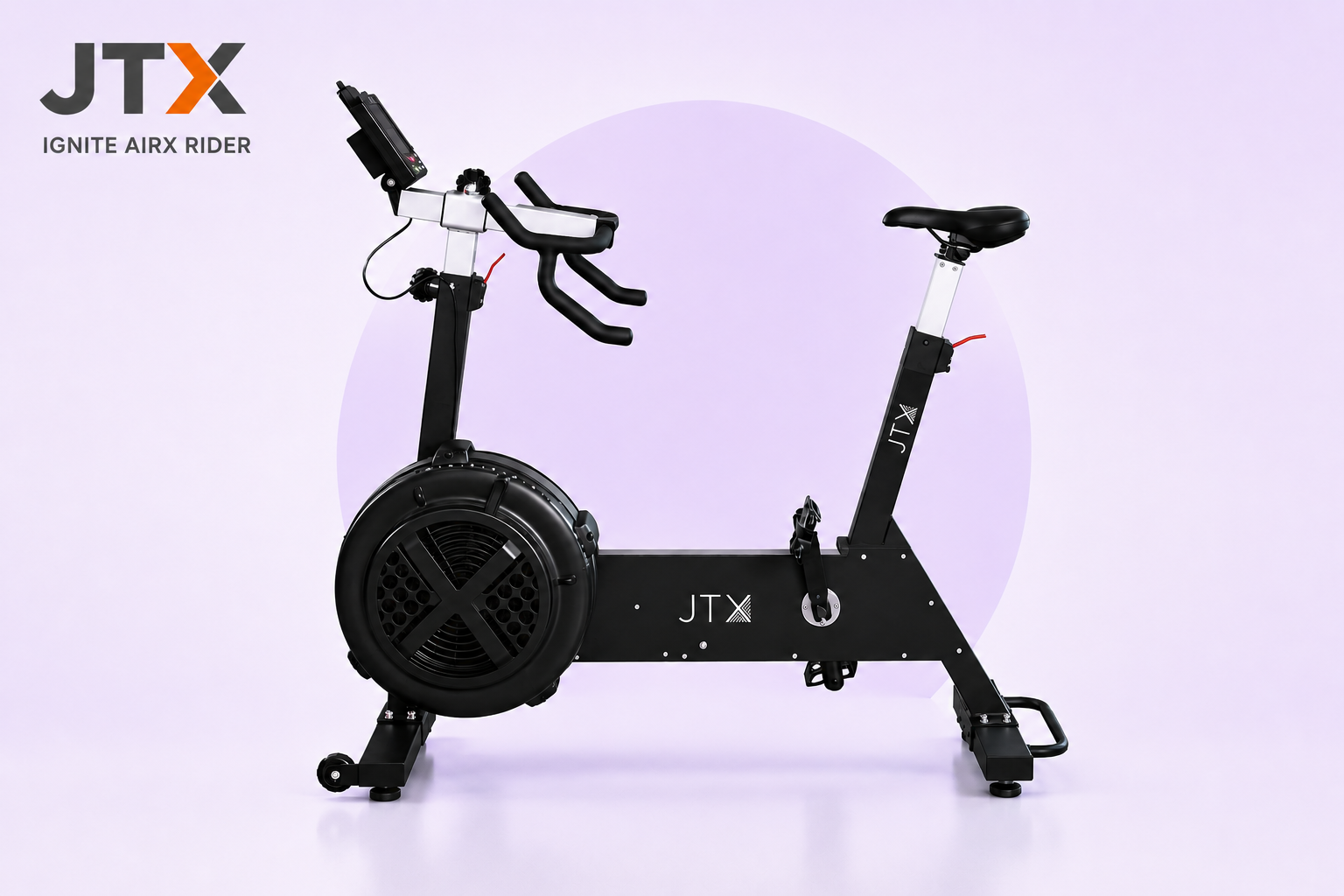
If your training is short and hard rather than long and steady, the Ignite AirX Rider is the subscription-free pick. It is a seated erg-style air bike with a freewheel and a performance console that reports drag factor, splits and history, and it connects to Zwift for structured sessions. The air resistance scales with how hard you push and never runs out.
Like every bike here it needs no membership. You get the data and the connectivity without a recurring fee.
Best for Interval and race training, and anyone who wants data-led conditioning rather than steady spinning.
Watch-out An air bike is a different tool to a spin bike, louder, and built for hard bursts rather than gentle rides.
Reebok Z-Tech Sprint
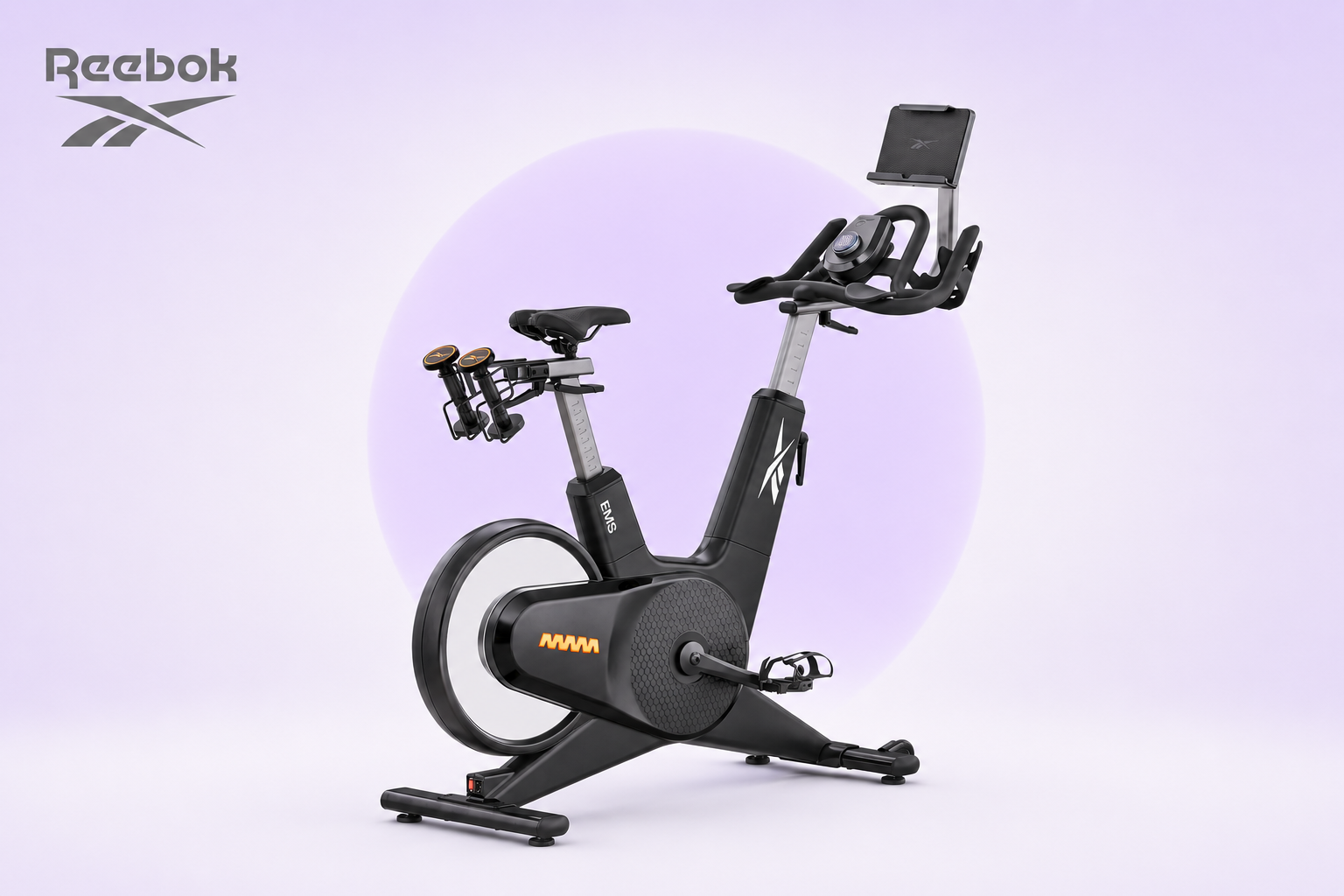
The Reebok Z-Tech Sprint is the clever one, and our value pick. It pairs a 13kg flywheel and 50 levels of app-controllable electromagnetic resistance with the widest app support on this list, Zwift, Kinomap, Rouvy and even the Peloton app. That means you can follow Peloton classes with no Peloton bike and no Reebok fee of its own. It ships with a 60-day Kinomap trial and a 150kg user limit.
The electromagnetic resistance can adjust itself as the gradient changes in a route or workout, so you get an automatic, immersive ride that usually costs a lot more.
Best for Anyone who wants the connected, class-led experience, Peloton classes included, without paying a monthly membership for the bike.
Watch-out You bring your own tablet, as there is no built-in screen, and the Peloton app itself still has its own separate fee if you choose to use it.
Reebok i-Bike
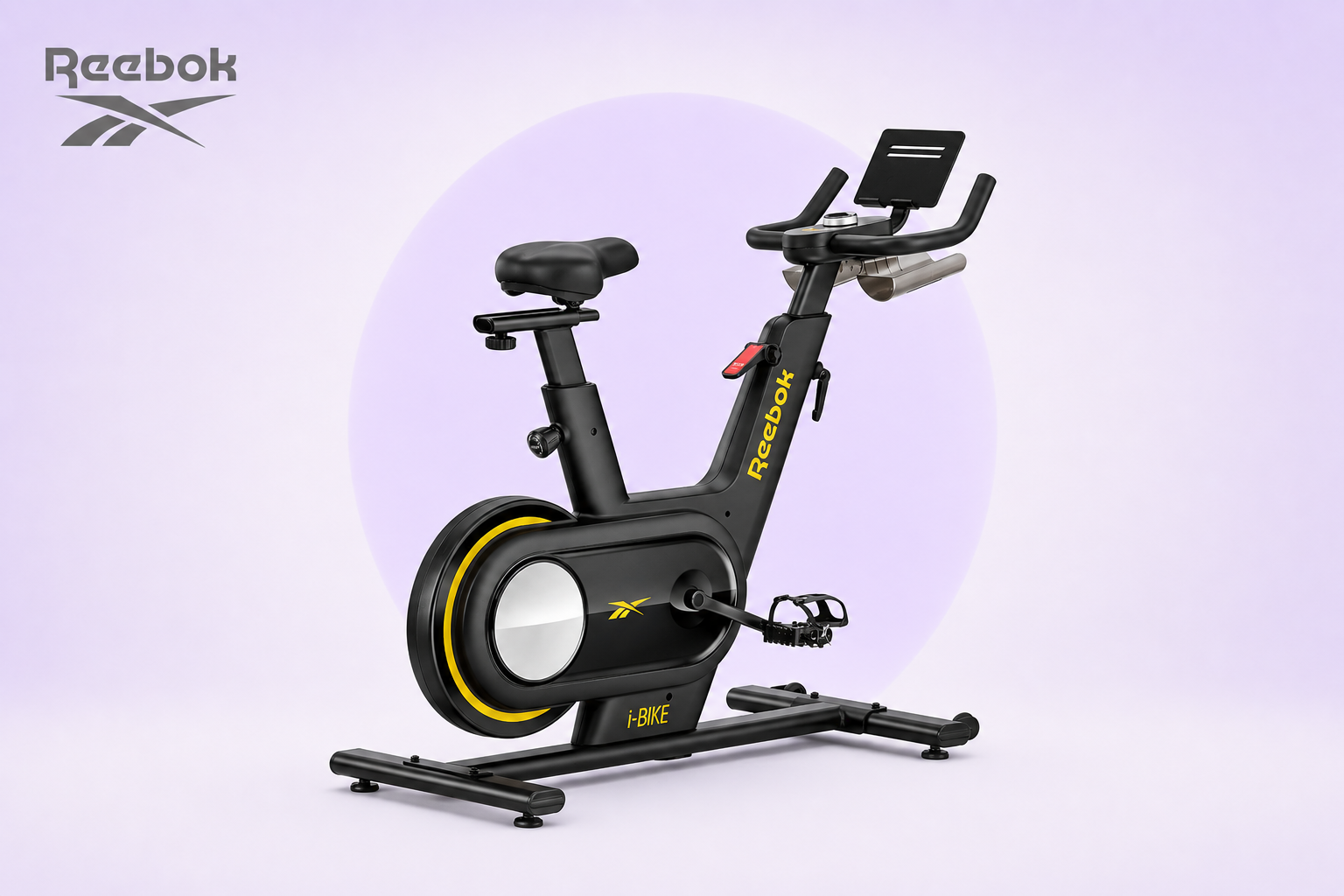
The Reebok i-Bike is the compact, affordable way onto app-connected riding. An 8kg flywheel, 32 levels of magnetic resistance, self-levelling pedals and Zwift and Kinomap support, in a small 131 by 51cm footprint that tucks into a flat or spare room. Same open, no-subscription approach as its bigger sibling.
It is heavily discounted at Sweatband and drops further with the GOAL10 code, which makes it one of the cheapest genuine connected bikes here.
Best for Smaller homes and tighter budgets that still want app-connected riding with no fee.
Watch-out A 110kg user limit and a lighter flywheel, so it suits steady cardio rather than hard, out-of-the-saddle training.
adidas C-21x
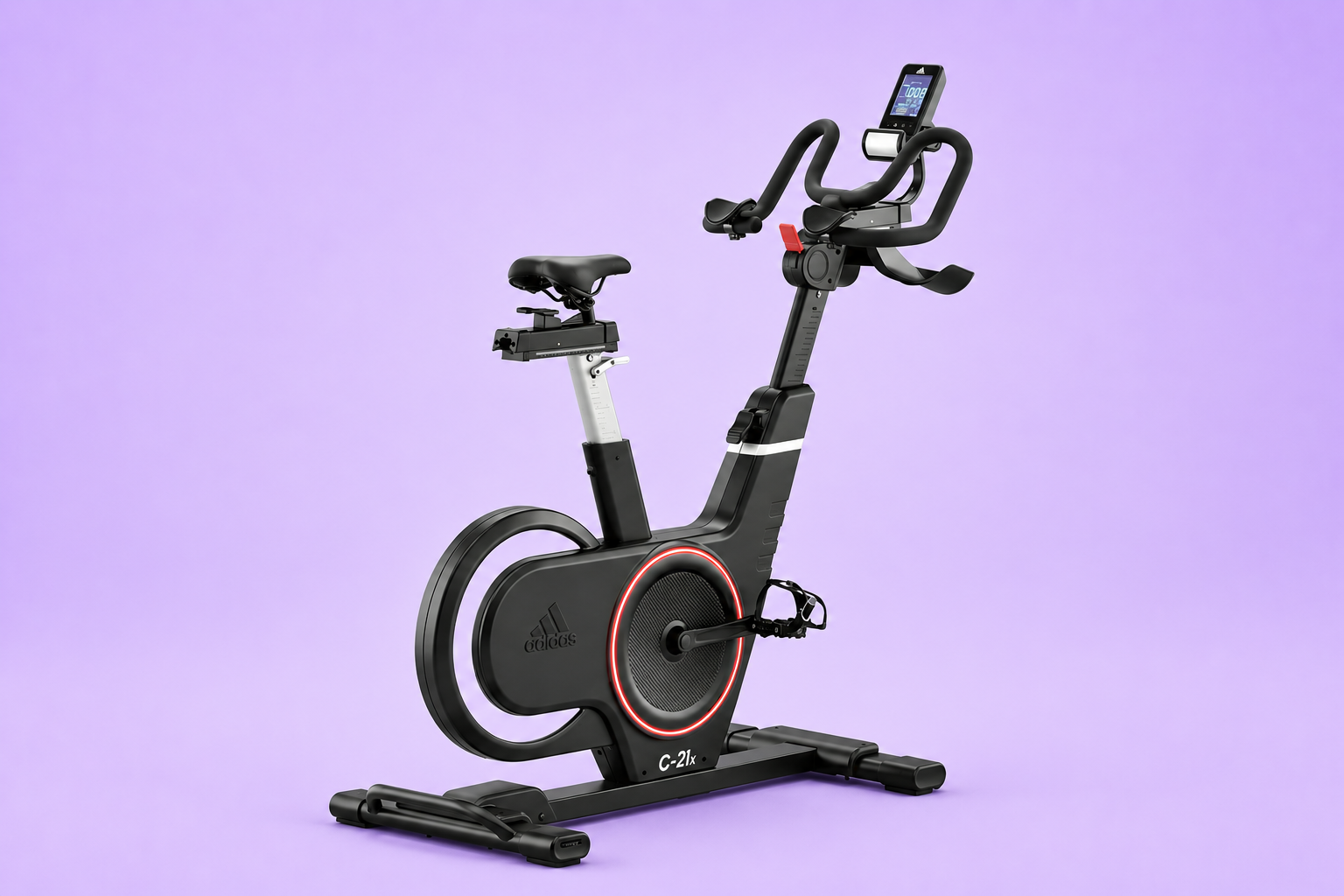
The adidas C-21x is the pick if you want a weighty, traditional spin feel. Its heavy 16kg rear-drive flywheel gives a smooth, road-like ride, and a manual resistance paddle lets you change effort instantly mid-sprint, the way a gym spin bike does. It connects to Zwift, Peloton and Kinomap over Bluetooth, and comes with a chest strap and SPD-ready pedals.
There is no adidas membership. You use whichever app you like on your own tablet, or just ride on the bike’s own numbers.
Best for Committed riders who want a heavy, traditional spin feel and like the brand.
Watch-out You pay a little for the three stripes, and resistance is a manual paddle rather than app-controlled.
JTX Cyclo-3M
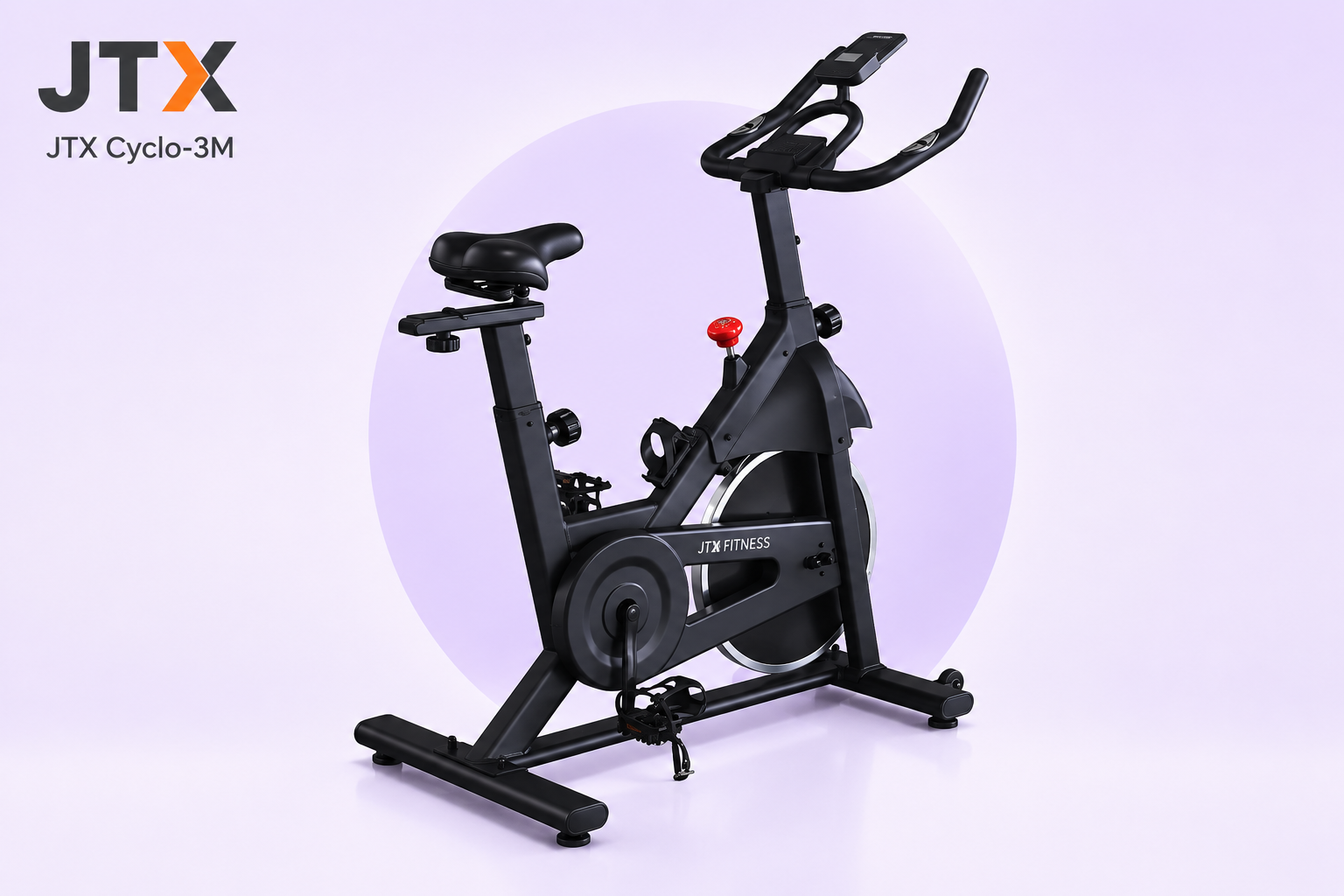
The JTX Cyclo-3M is the best budget bike here, and the sensible first spin bike. It is a compact, quiet magnetic bike with a 6kg flywheel, built for beginners and casual daily riders, and it comes with JTX’s in-home warranty behind it for peace of mind at the price.
There are no apps to set up and nothing to subscribe to. You get on and pedal, which is exactly what a lot of first-time buyers want.
Best for A first bike, or a simple, reliable daily ride on a budget, with nothing to configure.
Watch-out No app connectivity and a lighter flywheel, so it is a get-on-and-pedal bike rather than a connected one.
Viavito Satori
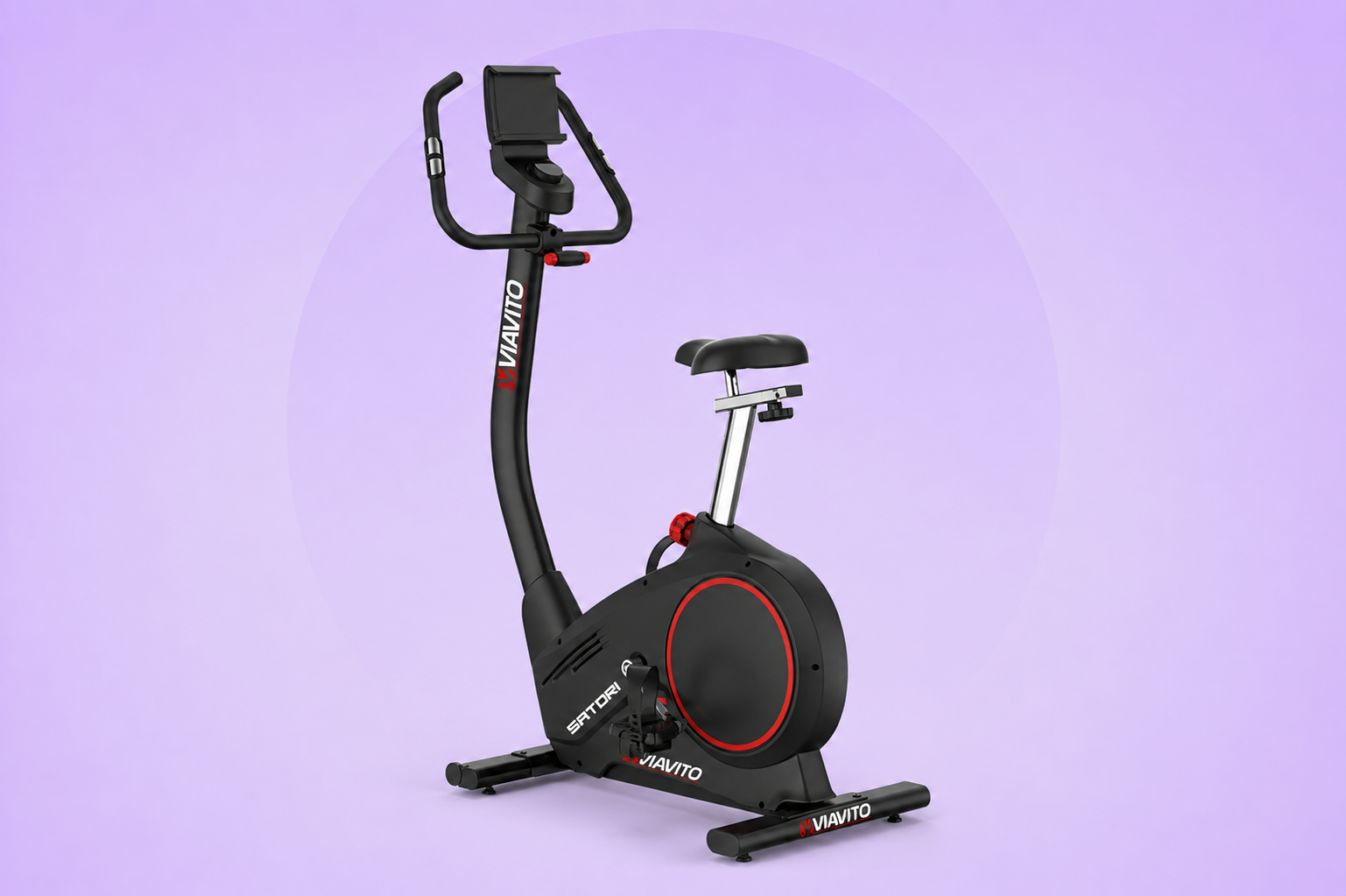
The Viavito Satori is remarkable value and the cheapest genuine route into connected riding on this list. For £229 you get a 9kg flywheel, 32 computer-controlled magnetic levels, adjustable bars and Bluetooth for Zwift and Kinomap, and it out-specs Viavito’s own pricier SB1. It is Sweatband’s budget brand, so it is often discounted further still.
No subscription, no locked-in app. You pair whichever app you fancy, on its own free or paid plan, from a bike that costs a fraction of the premium options.
Best for The cheapest way into app-connected riding, or testing whether indoor cycling sticks before spending more.
Watch-out Budget construction and a basic console, and as a newer brand its long-term durability is less proven than an established name.
The seven compared
| # | Bike | Type | Price | FitRank |
|---|---|---|---|---|
| 1 | JTX Studio Pro | Spin | £799 | 4.6 |
| 2 | JTX Ignite AirX Rider | Air (erg) | £799 | 4.6 |
| 3 | Reebok Z-Tech Sprint | Indoor cycle | £699 | 4.5 |
| 4 | Reebok i-Bike | Indoor cycle | £349 | 4.1 |
| 5 | adidas C-21x | Indoor cycle | £699 | 4.0 |
| 6 | JTX Cyclo-3M | Spin | £299 | 3.9 |
| 7 | Viavito Satori | Upright | £229 | 3.8 |
What counts as subscription-free
It is worth being precise, because the word subscription gets used loosely. A subscription-free bike is one that charges no compulsory fee of its own to work. That splits into two kinds on this list. The first is app-optional bikes like the JTX Studio Pro, the Reebok Z-Tech Sprint and the Viavito Satori, which connect over Bluetooth to third-party apps such as Zwift, Kinomap and Peloton. You use your own account on that app, on its free or paid tier, and you can stop any time and still have a fully working bike. The second is app-free bikes like the JTX Cyclo-3M, which have no connectivity at all and simply let you get on and pedal. Neither kind sends money to the bike maker every month.
The one nuance worth understanding is the Peloton app. On the Reebok Z-Tech Sprint you can follow Peloton classes without buying a Peloton bike, which is a genuine saving on hardware. The Peloton app itself still has its own separate fee if you choose to use it, but that is your choice on your terms, not a cost the bike forces on you.
What a subscription really costs over time
This is the arithmetic that makes subscription-free bikes worth considering even if you like the idea of classes. Platform memberships commonly run somewhere between £120 and £400 a year depending on the plan. Over three years that is a few hundred pounds at the low end and well over a thousand at the high end, on top of a bike that was rarely cheap to begin with. It is entirely possible to spend more on the membership than on the machine.
A subscription-free bike converts that recurring cost into a one-off. You can still add an app if you want structure, Zwift and Kinomap both have paid tiers and both have free or trial options, and you can stop paying whenever you like without the bike becoming less useful. That flexibility is the real product here, not the absence of software.
What you give up, and what you do not
Being fair about the trade matters. Subscription bikes offer two things these do not. The first is a large built-in touchscreen, which is genuinely more immersive than propping a tablet on a holder and removes the daily friction of setting up. The second is automatic resistance controlled by a trainer or a virtual gradient, though the Reebok Z-Tech Sprint’s electromagnetic resistance does exactly this through third-party apps, which is why it scores so well.
What you do not give up is the ride. Flywheel weight, frame quality, resistance smoothness and warranty are all hardware, and the JTX Studio Pro at £799 with a commercial-grade frame, a 16kg flywheel and a three-year in-home warranty is a better bike than plenty of connected machines costing more. The subscription buys content, not engineering.
Which apps work with these bikes
The app-optional bikes here pair over Bluetooth with the main third-party platforms, and it is worth knowing what each offers before you choose.
Zwift
A virtual world where you ride against other people in real time. Strong for structured training plans and racing, and the closest thing to a competitive group ride at home. Works with the JTX bikes, the Reebok pair, the adidas C-21x and the Viavito Satori.
Kinomap
Real-world route videos with your speed matched to the footage, so you ride actual roads and climbs. On bikes with electromagnetic resistance like the Reebok Z-Tech Sprint, the resistance changes automatically as the gradient does. The Reebok i-Bike ships with a 60-day Kinomap trial.
Peloton
The Reebok Z-Tech Sprint pairs with the Peloton app, so you can follow Peloton classes without buying Peloton hardware. The app has its own fee, but you have saved on the bike and you are not locked to it.
None of these is compulsory. Every bike here works with no app at all, showing your speed, time, distance and resistance on its own console.
How to choose a subscription-free bike
Decide if you want apps at all
If you like the idea of classes, virtual routes or structured workouts, choose an app-optional bike and pair it with Zwift, Kinomap or Peloton on your own tablet. If you would rather just ride, an app-free bike like the Cyclo-3M keeps things simple and cheap. Both avoid a compulsory membership, so this is about how you like to train, not about cost.
Look at the flywheel
Flywheel weight is the biggest single influence on how a bike feels. A heavier flywheel, the 13kg on the Reebok Z-Tech or the 16kg on the JTX Studio Pro and adidas C-21x, gives a smoother, more road-like ride, especially standing up. Lighter flywheels around 6 to 9kg are fine for steady cardio and keep the price and weight down.
Check the resistance type
Magnetic resistance is quiet, maintenance-free and standard across this list. Electromagnetic resistance, on the Reebok Z-Tech Sprint, goes a step further by letting an app adjust the load automatically as a route climbs. If you want the immersive, hands-off ride without a platform fee, that is the feature to look for.
Remember you supply the screen
Part of how these bikes stay subscription-free and cheaper is that they have no built-in touchscreen. You clip your own tablet or phone to the holder to run any app. If a large built-in screen matters more to you than avoiding a fee, a subscription bike is the trade you are really weighing, and our best exercise bikes with a screen guide covers those.
Check the warranty and user weight limit
A long warranty is worth a great deal on a machine you will use hard. JTX sell direct with a three-year in-home warranty, which is the strongest cover here. Check the user weight limit too, as budget bikes often sit lower, the Reebok i-Bike is rated to 110kg while the Z-Tech Sprint takes 150kg.
How we chose these bikes
Every bike on this page has been scored with FitRank, our editorial rating out of 5 that weighs performance, build quality, value and features against each bike’s rivals and its price. We do not rank by commission, and the order of this list follows the FitRank scores exactly. Our scores draw on published specifications and independent owner and reviewer feedback rather than a single showroom session, so they reflect how these bikes hold up in real homes over time.
Who should buy a subscription bike instead
If a large built-in screen and a trainer talking you through every session is what will get you on the bike three times a week, buy the subscription bike and pay the fee gladly. Motivation is the scarcest resource in home fitness, and a machine you use beats a cheaper one you do not. The same goes if you want the leaderboard and the community, which no third-party app quite replicates.
Everyone else is better off here. If you are self-motivated, if you already own a tablet, if you like Zwift or Kinomap, or if you simply object to renting access to a machine you have already bought, a subscription-free bike gives you the same ride and keeps the money.
Frequently asked questions
Do these exercise bikes really work without a subscription?
Which is the best exercise bike with no subscription?
Can I use Peloton without buying a Peloton bike?
How are these different from an Echelon or NordicTrack bike?
Do I need to buy a screen for these bikes?
Are subscription-free bikes cheaper to own?
Is Zwift free?
Which subscription-free bike has automatic resistance?
Are cheap exercise bikes without subscriptions any good?
If a built-in screen and guided classes appeal more than avoiding a fee, see our best exercise bikes with a screen. Working to a budget? Our best exercise bikes under £500 guide has the value picks. For the full field across every type and brand, start with our main best exercise bikes guide.

Chris writes the home fitness reviews across our sites, including our sister site HomeTreadmill.co.uk. He compares every machine against its rivals on UK pricing and specs, and scores each one with FitRank.
We may earn a commission if you buy through links on this page, at no extra cost to you. It never affects our FitRank score. See our affiliate disclosure.