
Exercise Bikes · Workout
HIIT Bike Workout
High-intensity interval training is short, hard and efficient, which is why it suits people with twenty minutes rather than an hour. Here is a HIIT bike workout you can do on any exercise bike, plus how hard to push, how often to do it, and why more is not better.
In shortTwenty minutes total. Five minutes easy to warm up, then eight rounds of 30 seconds hard and 60 seconds easy, then five minutes easy to cool down. Hard means roughly 8 out of 10 effort, where talking is not possible. Do it once or twice a week at most, with easier riding or rest in between.
On this page
- The 20-minute session
- How hard is hard
- Why intervals work
- Which bikes suit HIIT best
- How often should you do it
- Making it harder over time
The 20-minute session
This is the whole workout. It works on a spin bike, an upright, a recumbent or an air bike, and it needs no app, no class and no screen. The only thing you need to get right is the effort, which is covered in the next section.
| Phase | Time | Effort | What to do |
|---|---|---|---|
| Warm-up | 5 min | 3 to 4 out of 10 | Easy spinning, light resistance. Gradually raise the pace so you finish the five minutes breathing a little harder. |
| Interval | 30 sec | 8 out of 10 | Raise the resistance and drive hard. Fast but controlled, not flailing. You should not be able to hold a conversation. |
| Recovery | 60 sec | 3 out of 10 | Drop the resistance right down and spin easily. Let your breathing come back before the next round. |
| Repeat | 8 rounds | – | That is 12 minutes of intervals in total. If you cannot complete round eight at a proper effort, you started too hard. |
| Cool-down | 5 min | 2 to 3 out of 10 | Very easy spinning until your breathing and heart rate settle. Do not skip this. |
Total time is twenty minutes, of which four are genuinely hard. That is the appeal of intervals. If you have never done anything like this, start with four or five rounds rather than eight and build up over a few weeks.
How hard is hard
Forget heart-rate zones for a moment. The most reliable way to gauge effort on your own bike is the talk test, backed by a simple one-to-ten scale of how hard something feels.
| Effort | How it feels | Talk test |
|---|---|---|
| 2 to 3 | Very easy, could do this all day | Full conversation, singing possible |
| 4 to 5 | Comfortable, steady, sustainable for an hour | Talking in full sentences |
| 6 to 7 | Working, breathing hard, uncomfortable but manageable | Short sentences only |
| 8 | Hard. This is the interval effort | A word or two at most |
| 9 to 10 | All out sprint, unsustainable | Cannot speak |
The intervals in this session are an 8, not a 10. That is deliberate. Going absolutely maximal on the first round means falling apart by the fourth, and a session of eight solid efforts beats two heroic ones followed by six poor ones. If you are using a heart-rate monitor, treat it as information rather than instruction, because how you feel is a better guide than a number that varies with sleep, caffeine and stress.
Why intervals work
Interval training alternates hard efforts with recovery, which lets you accumulate more time at a high intensity than you could in one continuous hard block. That stimulus improves cardiovascular fitness and your ability to clear and tolerate fatigue, and it does so in less total time than steady riding.
The honest caveat is that HIIT is not magic and it is not better than steady riding at everything. Steady moderate rides are easier to recover from, easier to do often, and far more pleasant while watching television, which makes them easier to sustain for years. The best approach for most people is a mixture. One or two interval sessions a week, and the rest of your riding steady and comfortable.
Which bikes suit HIIT best
Any bike will do this session, but some make it easier. Two things matter, how quickly you can change resistance, and whether the bike is stable when you push hard.
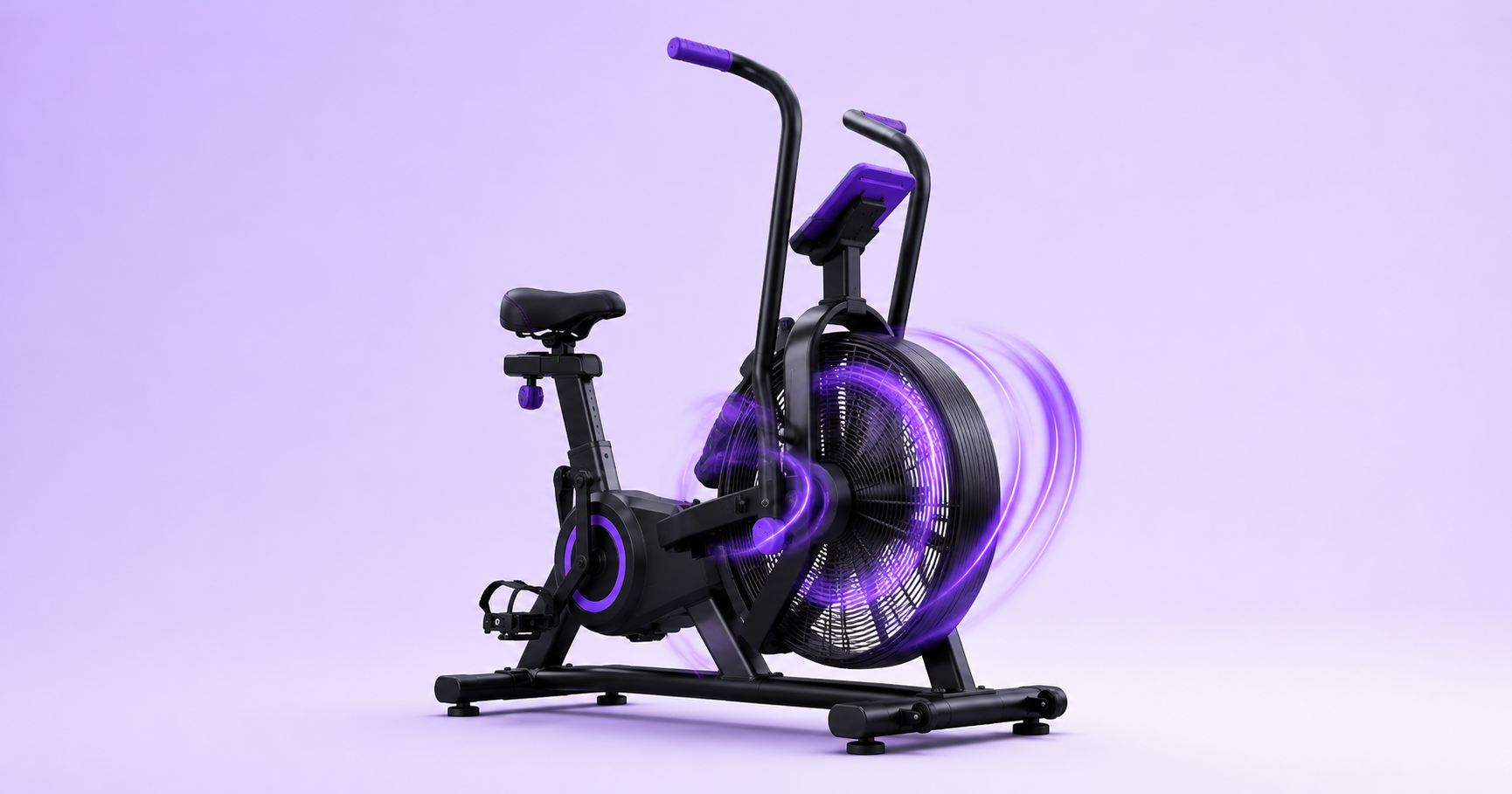
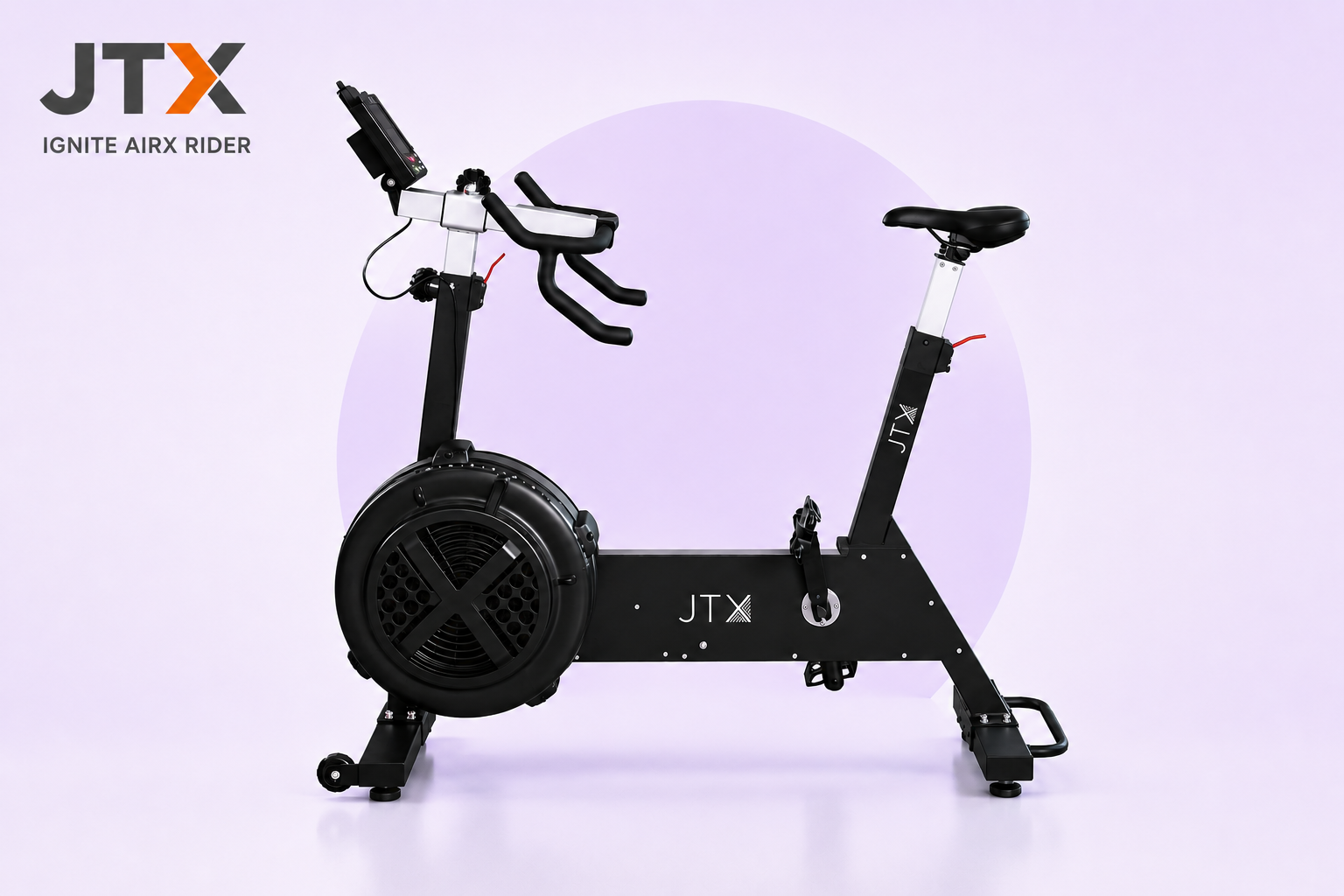
Air bikes are the ideal tool
On an air bike like the JTX Ignite AirX Rider, resistance scales with how hard you push and never runs out, so a maximal effort is always available without touching a dial. That makes the transitions instant and the effort perfectly self-regulating.
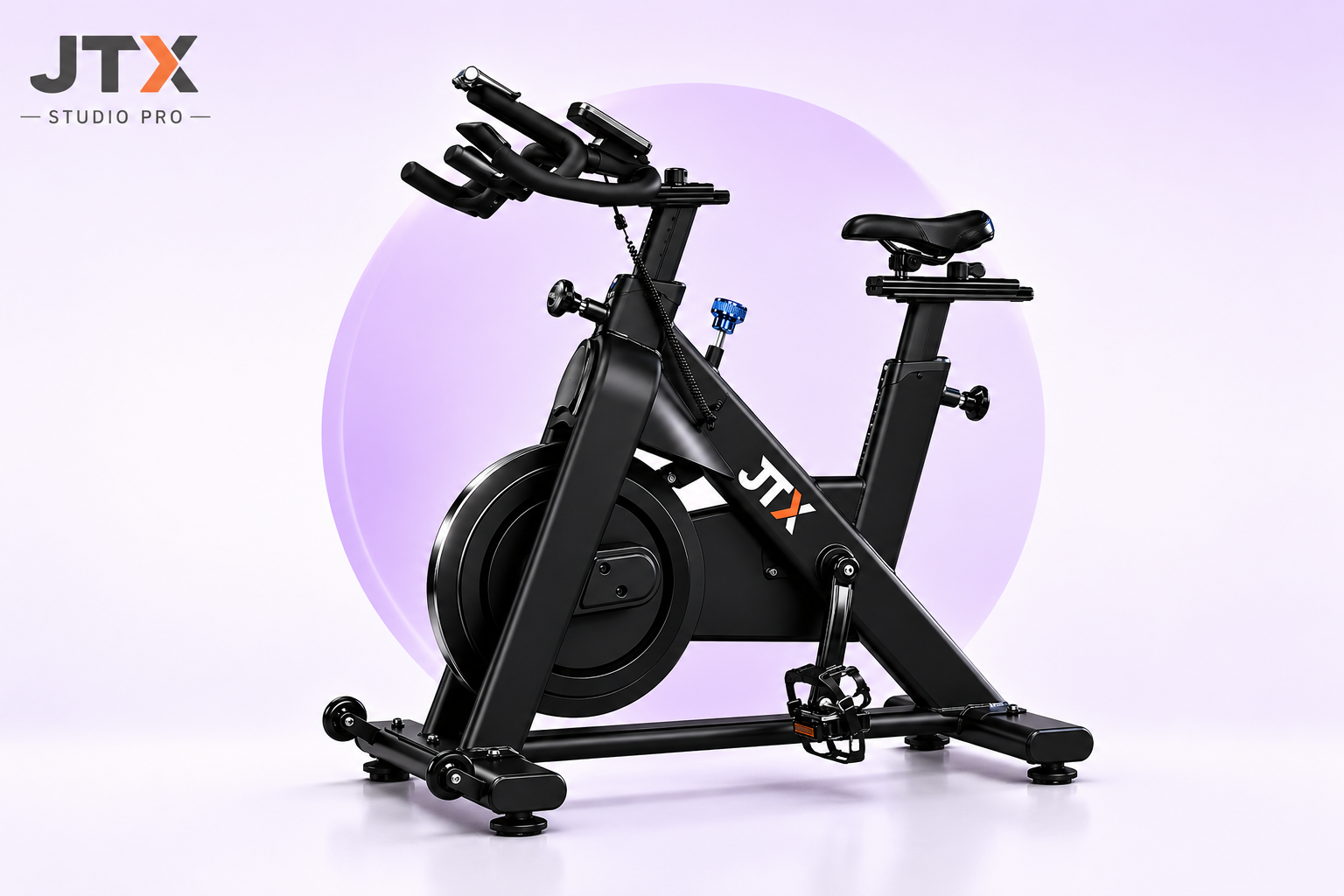
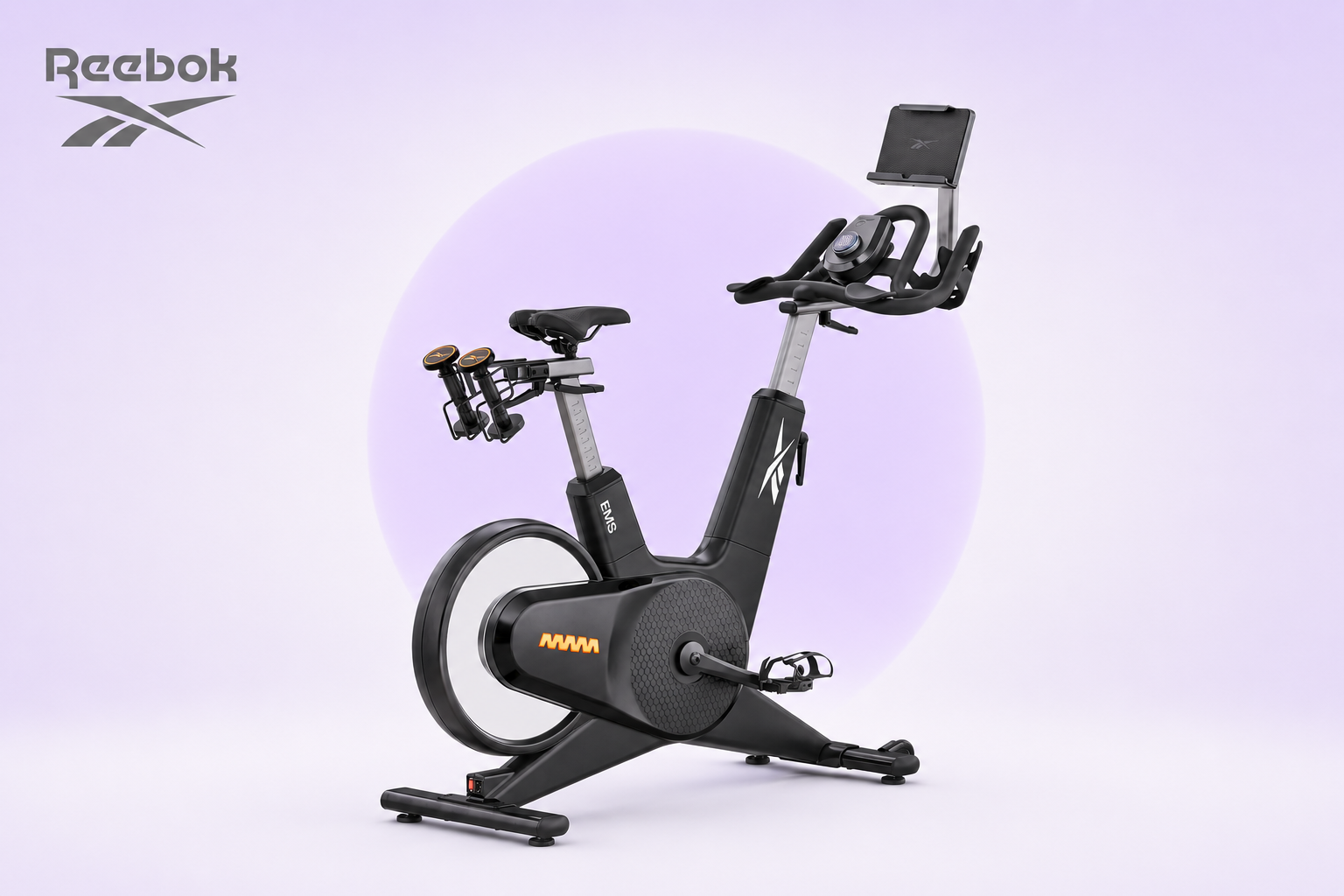
Heavy-flywheel spin bikes are excellent
A weighty flywheel gives a smooth, road-like feel under load, and a quick resistance lever means you can add and drop load in a second. The JTX Studio Pro and Reebok Z-Tech Sprint both do this well, and the Reebok’s electromagnetic resistance can even be controlled by an app.
Budget and folding bikes are limited
Light flywheels and slow dial adjustment make sharp intervals awkward, and very light bikes can feel unstable when you drive hard. You can still do a version of this session, just expect the transitions to be less crisp and keep the efforts seated.
How often should you do it
Once or twice a week is plenty for most people, with at least a day of easy riding or rest between sessions. HIIT is demanding, and the adaptation happens while you recover rather than while you ride. Doing it four or five times a week is a reliable route to feeling flat, sleeping badly and eventually stopping altogether.
If you are tired, unwell or have slept badly, ride easy instead or take the day off. Skipping one hard session costs you nothing. Grinding through a run of them when you are exhausted costs you weeks. Progress comes from consistency across months, not from any single workout.
Making it harder over time
Once eight rounds feel comfortable, resist the urge to simply do more of them. Better options, roughly in the order worth trying, are to increase the resistance while holding the same cadence, extend the work interval to 40 seconds, or shorten the recovery to 45 seconds. Change one variable at a time and give it two or three weeks before changing another.
There is a ceiling to this, and it is fine. A twenty-minute session done properly once or twice a week for a year will do far more for you than an ever-escalating programme you abandon in February.
Frequently asked questions
What is a good HIIT workout on an exercise bike?
How long should a HIIT bike workout be?
How many times a week should I do HIIT on a bike?
Is HIIT on an exercise bike good for weight loss?
Can beginners do HIIT on an exercise bike?
Do I need a special bike for HIIT?
Should I stand up during the intervals?
This is general information rather than medical advice, and HIIT is demanding. If you have a heart condition, high blood pressure, joint problems, you are pregnant, or you have been inactive for a long time, speak to your GP before starting interval training. Stop immediately if you feel chest pain, dizziness or unusual breathlessness.
New to indoor cycling? Start with our gentler indoor cycling workout. Choosing a bike for interval work? See our best exercise bikes guide and the bikes with no monthly fee.

Chris writes the home fitness reviews across our sites, including our sister site HomeTreadmill.co.uk. He compares every machine against its rivals on UK pricing and specs, and scores each one with FitRank.
We may earn a commission if you buy through links on this page, at no extra cost to you. It never affects our FitRank score. See our affiliate disclosure.