
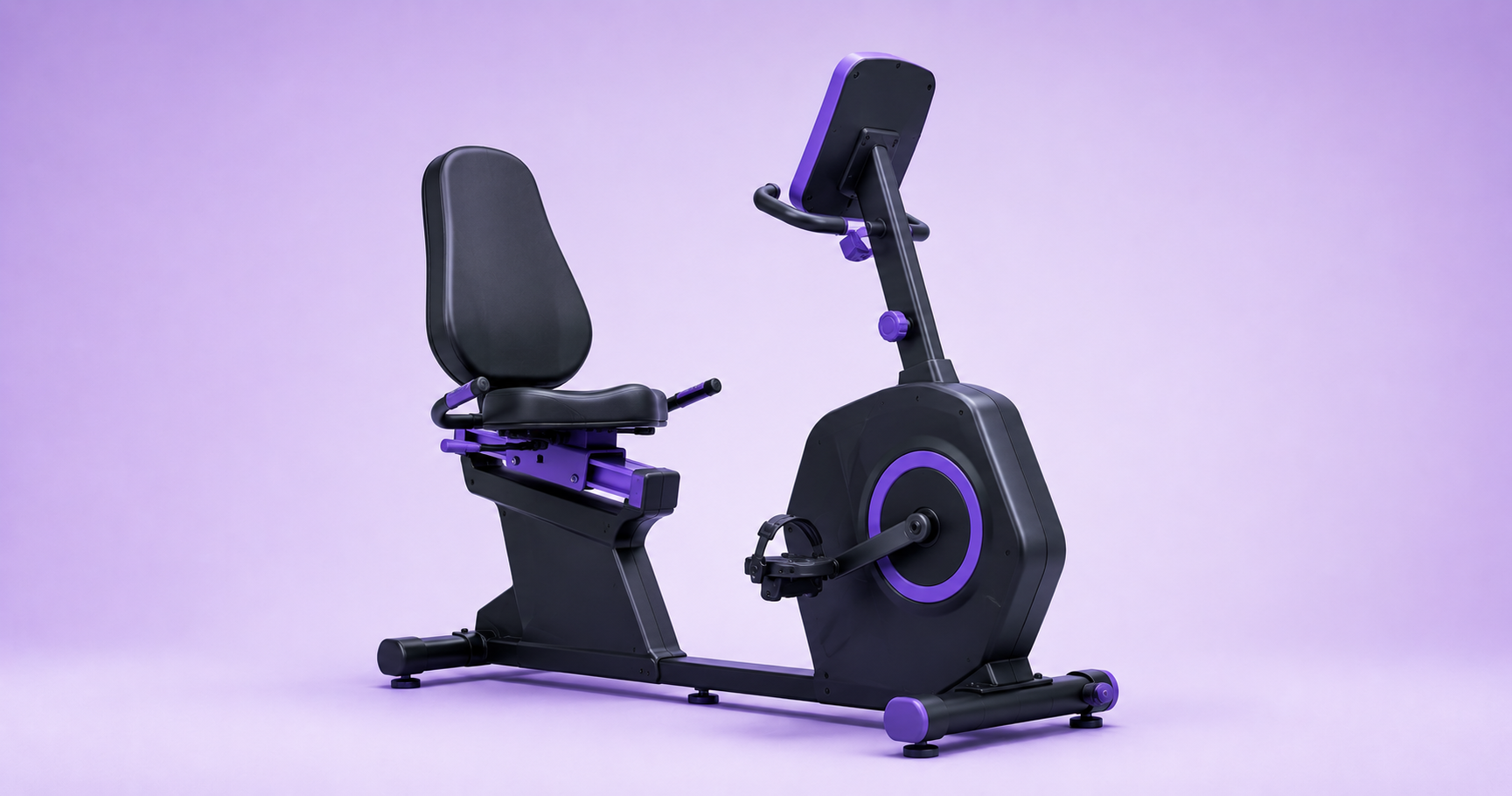
Exercise Bikes · Buying Guide
Best Recumbent Exercise Bikes
A recumbent bike is the comfortable, low-impact way to do cardio at home. You sit back in a supported, chair-like seat with the pedals out in front, which takes the strain off your back and knees, so you can ride longer and more often. Here are the best recumbent exercise bikes in the UK, ranked on FitRank, with prices and who each one suits.
Recumbents are the bike of choice for anyone who finds an upright saddle uncomfortable, and for older riders, people with back pain, heavier users and anyone easing back into exercise after injury. The reclined position spreads your weight across a large seat and backrest, and the low step-through frame makes getting on and off easy. What you give up is compactness, a recumbent has a bigger footprint than an upright, but for comfort and joint-friendly riding nothing else comes close.
All three of our picks are built around iFIT, so a trainer can guide your ride and adjust the resistance for you. Worth knowing up front, they all ride perfectly well as manual bikes without a membership, so a subscription is an option rather than a requirement. We have scored every bike on the site with FitRank, and this list runs in FitRank order.
The quick list
- Best overall · NordicTrack GX10 Recumbent · FitRank 4.2 · £1,499
- Best value · ProForm 325 CSX · FitRank 4.1 · £599
- Best for comfort · NordicTrack GX LE Recumbent · FitRank 4.0 · £784
NordicTrack GX10 Recumbent
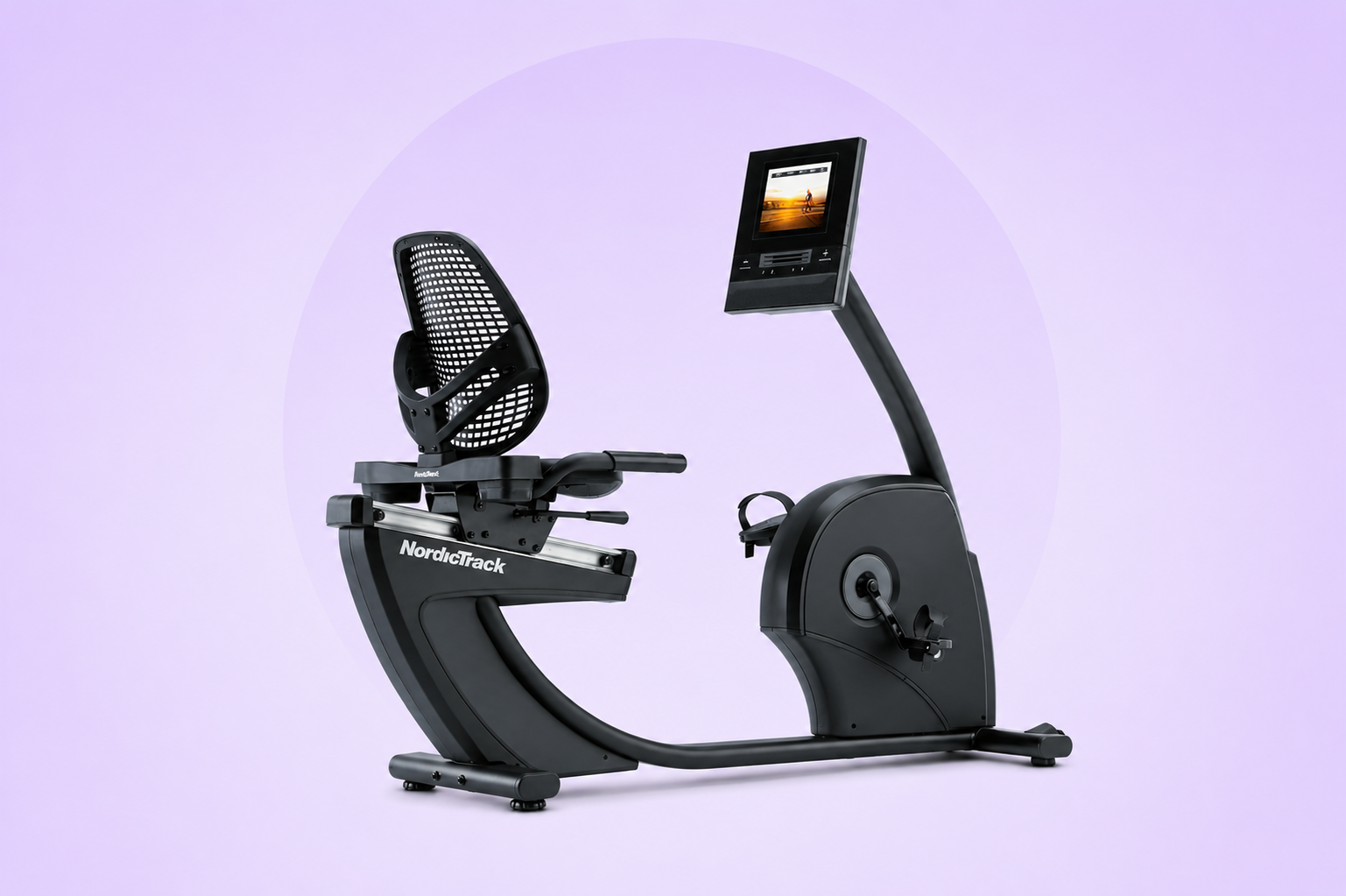
The NordicTrack GX10 Recumbent is the most complete recumbent in the range, and our top pick. It pairs a large cushioned seat and full back support with a built-in touchscreen and iFIT, so a trainer can adjust the resistance for you through scenic rides and studio classes while you sit back in a supported, chair-like position. The step-through frame is low and easy, and the seat slides to fit a wide range of heights.
It is the most comfortable and most guided way to do low-impact cardio at home, with the automatic resistance doing the thinking so you just pedal and follow along.
Best for Anyone who wants the full guided, low-impact experience with a big screen and automatic resistance, and has the budget for it.
Watch-out At £1,499 it is a serious outlay for a recumbent, and the guided classes and routes that justify it need an ongoing iFIT membership.
ProForm 325 CSX
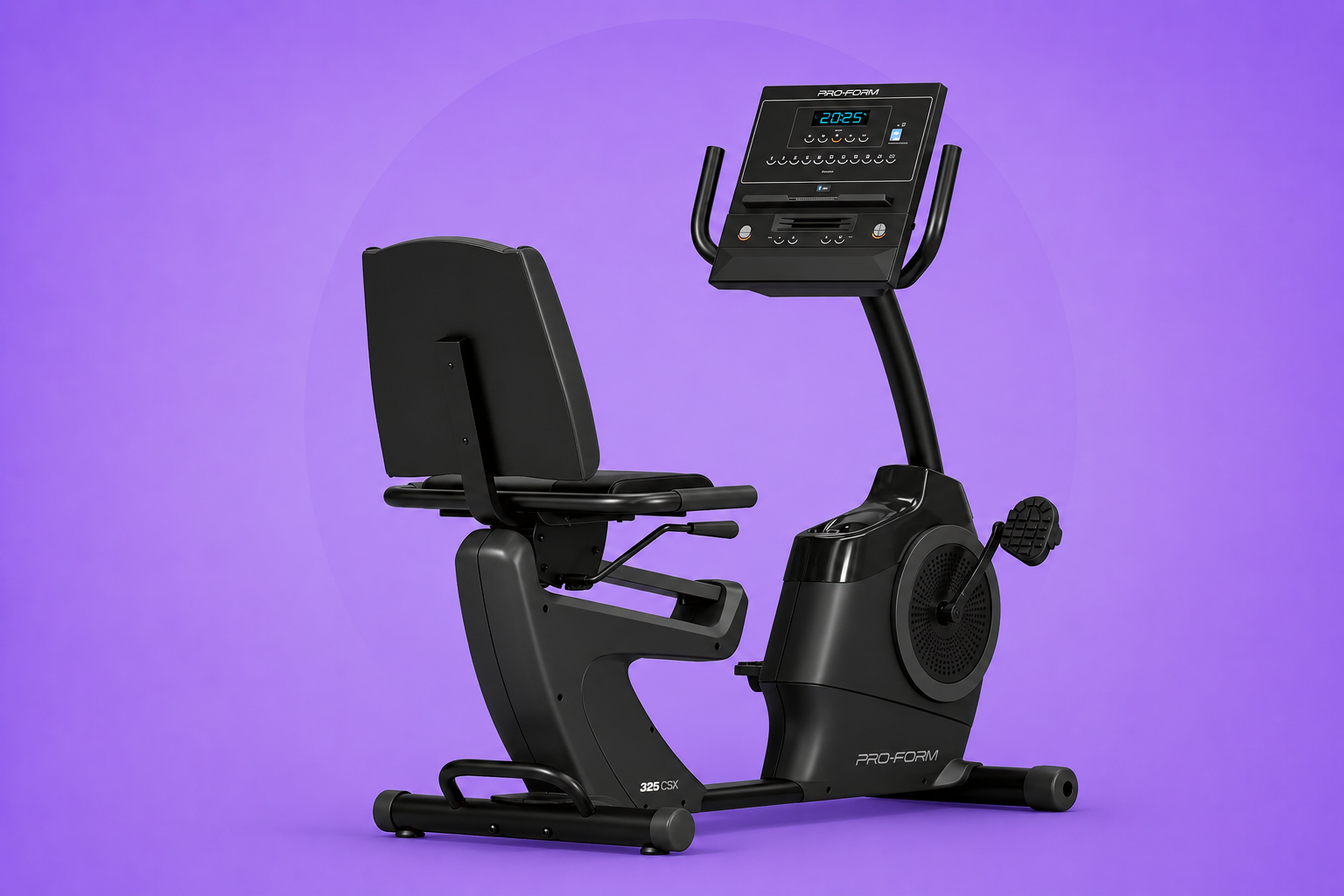
The ProForm 325 CSX is the value recumbent, and the one most people should look at first. It has the same comfortable step-through frame and supportive padded seat, with adjustable magnetic resistance and an iFIT-enabled console, plus a 30-day iFIT trial in the box. You get most of the low-impact comfort of the pricier NordicTracks for a fraction of the money.
There is no built-in screen, so you run iFIT or any workout on your own tablet clipped to the holder, which keeps the price down without losing the guided option.
Best for Comfortable, low-impact home cardio on a sensible budget, with the option of guided workouts if you want them.
Watch-out No built-in touchscreen, and the full iFIT class library needs a membership once the 30-day trial ends.
NordicTrack GX LE Recumbent
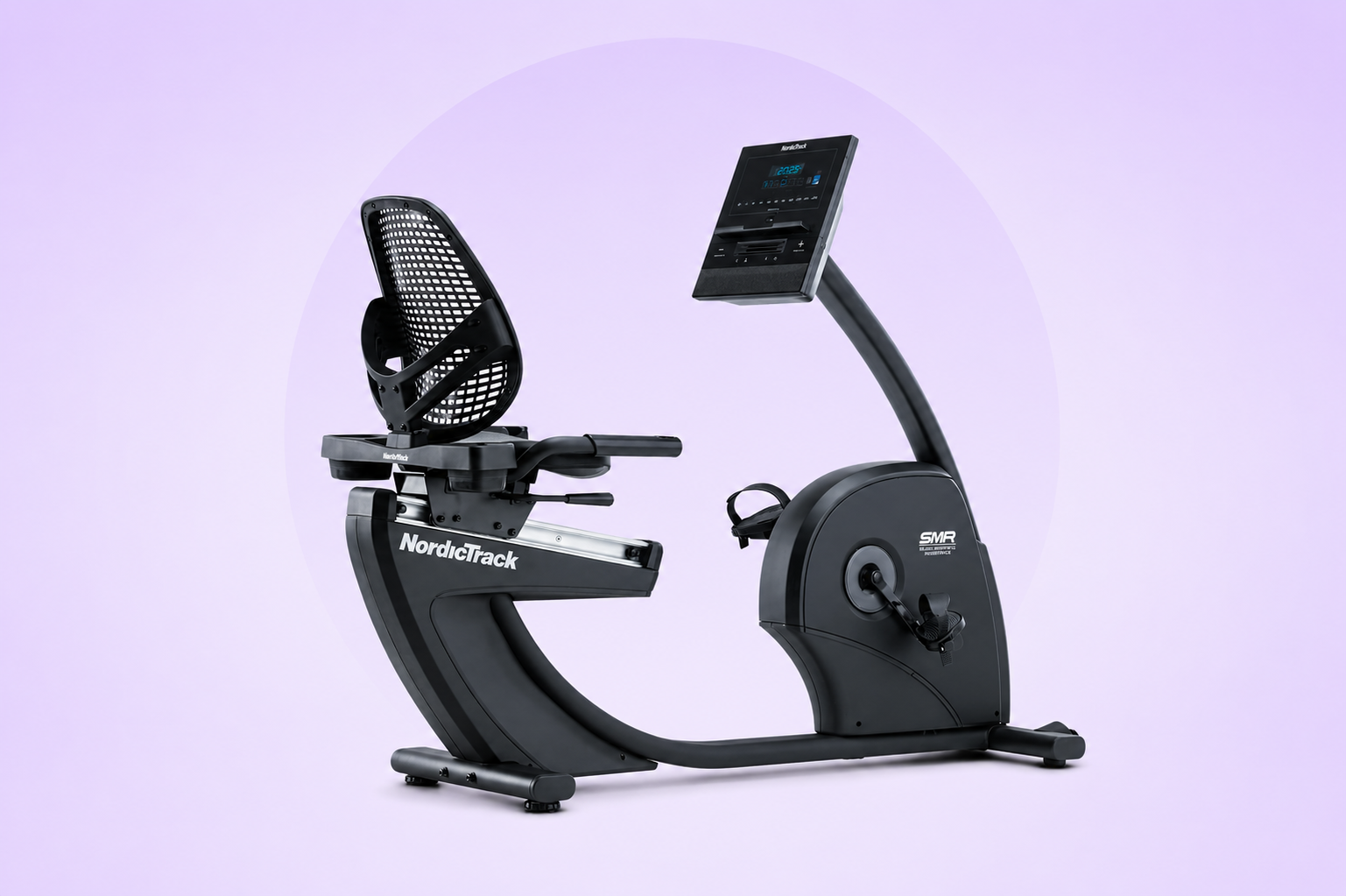
The NordicTrack GX LE Recumbent is tuned around comfort rather than outright specs. It has an oversized, breathable seat and one of the easiest low step-throughs here, which makes getting on and off simple for anyone with limited mobility. It is iFIT-enabled for guided sessions on your own tablet, with NordicTrack’s build quality behind it.
If the priority is a seat you can sit on comfortably for a long, gentle session, this is the one that leads on that.
Best for Riders who put seat comfort and an easy step-through first, including seniors and anyone easing back into exercise.
Watch-out It sits above the cheaper ProForm on price without a clear feature lead, and like the others leans on iFIT for its best features.
The three compared
| # | Bike | Screen | Price | FitRank |
|---|---|---|---|---|
| 1 | NordicTrack GX10 Recumbent | Built-in | £1,499 | 4.2 |
| 2 | ProForm 325 CSX | Your tablet | £599 | 4.1 |
| 3 | NordicTrack GX LE Recumbent | Your tablet | £784 | 4.0 |
What a recumbent bike actually is
A recumbent exercise bike puts you in a reclined, seated position with a backrest behind you and the pedals out in front rather than beneath you. That single change alters almost everything about how the bike feels. Your weight rests on a broad, padded seat instead of a narrow saddle, your spine is supported rather than hunched, and your hands are free rather than bearing weight through the wrists. The frame is a low step-through, so you walk into the bike and sit down rather than swinging a leg over and climbing on.
The result is a machine you can ride for forty-five minutes while watching television without any of the numbness, saddle soreness or lower-back ache that drives people off an upright. That comfort is not a luxury, it is the whole point. The bike you find comfortable is the bike you actually use, and consistency beats intensity for almost everyone training at home.
Why choose a recumbent bike
The case for a recumbent is comfort and low impact. Because you sit back against a supportive backrest with your weight spread across a large seat, there is no pressure on your wrists, no sore saddle and far less load on your lower back. The pedalling motion is smooth and controlled, which is gentle on the knees and hips, so a recumbent is often the bike people can keep using when an upright has become uncomfortable.
That gentleness explains why recumbents turn up so often in rehabilitation settings and why they suit older riders, heavier riders and anyone returning to exercise after a break or an injury. The supported position also makes the bike stable and unintimidating, which matters more than any specification if balance or confidence is a concern. If you have a specific condition or are recovering from surgery, it is worth a quick word with your GP or physiotherapist about resistance levels and how often to ride, but as a category recumbents are among the most forgiving cardio machines you can own.
Recumbent, upright or spin bike
The three main types of exercise bike suit genuinely different people, and picking the wrong one is the most common and most expensive mistake buyers make.
Recumbent
Reclined, fully supported, pedals in front. The most comfortable and the gentlest on the joints, and the easiest to get on and off. Best for long, steady, low-impact sessions, older riders, back or knee trouble, and anyone easing back into exercise. The trade is a larger footprint and a less intense workout.
Upright
You sit over the pedals as you would on a normal bike, on a padded seat with handlebars in front. More compact than a recumbent and more versatile than a spin bike, with a moderate, general-fitness feel. Best for people short on space who want something familiar and comfortable enough.
Spin bike or indoor cycle
A forward-leaning, road-racing position with a heavy flywheel. The most vigorous and sweat-inducing of the three, ideal for interval training and virtual classes, and the least comfortable for long, gentle rides. Best for riders who want to train hard rather than train comfortably.
If comfort, joint health or ease of access are anywhere near the top of your list, a recumbent is the right answer. If you want to sprint and sweat, look at our indoor cycle picks instead.
Understanding iFIT and what it costs
All three bikes here are iFIT-enabled, so it is worth explaining what that means before you buy. iFIT is a subscription platform of guided workouts, streamed either to the bike’s own screen on the GX10 or to your tablet on the ProForm 325 CSX and GX LE. Its distinctive feature is that a trainer controls your resistance during a class or scenic route, so the bike gets harder as the virtual road climbs. It is genuinely motivating, and for many riders it is the difference between using a bike and ignoring it.
What matters practically is that iFIT is optional. Every bike on this page rides as a straightforward manual machine with adjustable resistance the moment you unbox it. If you never subscribe, you still have a fully working recumbent, you simply set the resistance yourself. Budget for the membership if the guided rides appeal, and ignore it entirely if they do not. If you want a bike with no subscription in the picture at all, see our best exercise bikes without a subscription guide.
How to choose the right recumbent
Seat and step-through
This is the heart of a recumbent, so look for a large, well-padded and ideally breathable seat, an easy fore-and-aft adjustment to fit your leg length, and a low step-through frame if getting on and off is a concern. The GX LE leads on seat comfort, while all three offer a proper supported backrest. If more than one person will use the bike, check the seat slides easily rather than needing tools.
Resistance and guidance
All three use smooth, quiet magnetic resistance with no friction pads to wear out. The difference is whether you want that resistance controlled for you. With iFIT the resistance adjusts automatically through a class or scenic route, which takes the thinking out of a session. Ride manually and you set the level yourself, which is perfectly fine for steady cardio.
Screen or your own tablet
Only the GX10 has a built-in touchscreen. The ProForm 325 CSX and GX LE use the iFIT app on your own tablet, clipped to the console, which keeps their prices down. If a big integrated display matters to you, that is most of what the extra spend on the GX10 buys. If you already own a tablet, the cheaper bikes give you the same content on a smaller screen.
Footprint, weight limit and assembly
Recumbents are longer than uprights, so measure your space before you order, and remember you need room to step in at the side. Check the user weight limit against your own weight rather than assuming, and be aware these are heavy machines to assemble, so plan for two people or a delivery option that includes assembly.
How we chose these bikes
Every bike on this page has been scored with FitRank, our editorial rating out of 5 that weighs performance, build quality, value and features against each bike’s rivals and its price. We do not rank by commission, and the order of this list follows the FitRank scores exactly. Our scores draw on published specifications and independent owner and reviewer feedback rather than a single showroom session, so they reflect how these bikes hold up in real homes over months of use.
Who should not buy a recumbent
Recumbents are not for everyone, and it is worth being honest about that. If you want a hard, sweaty interval workout, the reclined position limits how much power you can put down and how much you can use your upper body, so a spin bike will serve you better. If floor space is genuinely tight, a recumbent is the largest of the three bike types and a folding upright will suit you far better. And if the appeal of cycling is that it feels like riding a bike, a recumbent will feel odd, because it does not. For everyone else, particularly anyone who has quietly stopped using an uncomfortable upright, this is the category that gets you back on a bike.
Frequently asked questions
Who are recumbent exercise bikes best for?
Do these recumbent bikes need an iFIT subscription?
Are recumbent bikes good for weight loss?
What is the difference between a recumbent and an upright bike?
Can I use a recumbent bike with bad knees or after surgery?
Are recumbent bikes worth it?
How much space does a recumbent bike need?
Are recumbent bikes good for seniors?
Do recumbent bikes work your core and glutes?
Prefer to keep costs down with no membership at all? See our best exercise bikes without a subscription. For senior-friendly options across every type, read our best exercise bikes for seniors guide, and for the full field start with our main best exercise bikes guide.

Chris writes the home fitness reviews across our sites, including our sister site HomeTreadmill.co.uk. He compares every machine against its rivals on UK pricing and specs, and scores each one with FitRank.
We may earn a commission if you buy through links on this page, at no extra cost to you. It never affects our FitRank score. See our affiliate disclosure.